









Always in sync, even across episodes
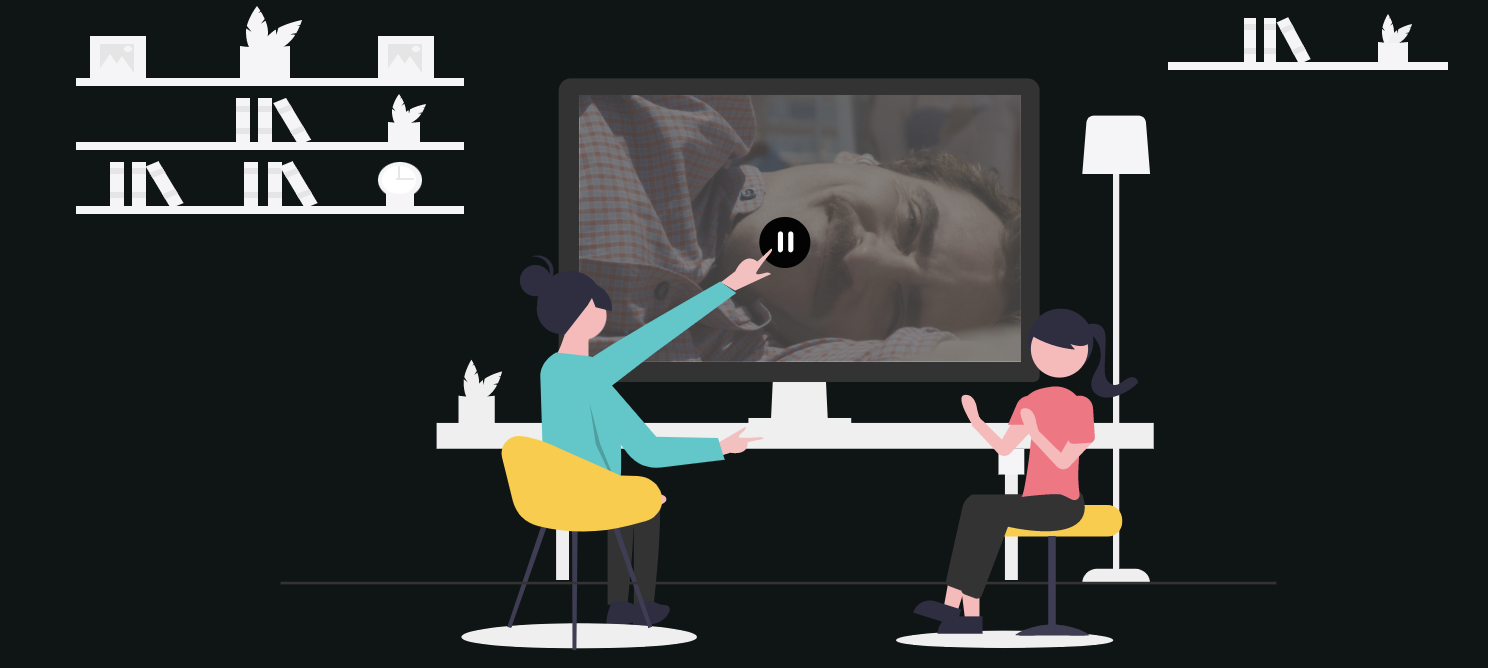
No more "wait, let me pause" moments. Our sync engine keeps everyone frame-perfect—even when you binge multiple episodes in one party.

Start playing any video on Netflix, Disney+, or 10+ supported platforms.
Click the Flickcall logo on top right once video starts or hit the Flickcall icon on chrome toolbar. Your watch party is ready in one click.
Copy the party link and send it to your friends. They join with one click—no sign-up required.
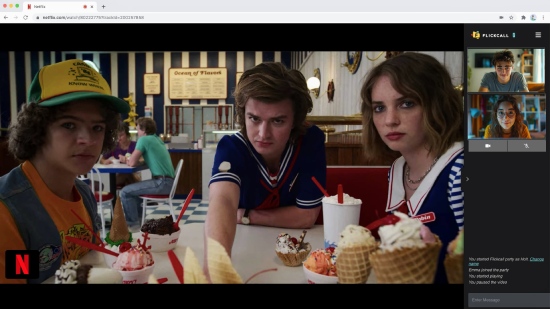
Create watch parties on Netflix, Disney+, JioHotstar, JioHotstar, HBO Max, MAX, Hulu, Prime Video, Youtube, Zee5, Sony Liv, JioHotstar with Flickcall.

No more "wait, let me pause" moments. Our sync engine keeps everyone frame-perfect—even when you binge multiple episodes in one party.

Catch your friends gasping at plot twists. Share laughter in real-time. Video chat makes every watch party feel like you're on the same couch.

Install the extension, play any video, click the Flickcall icon. That's it—share the link and you're watching together.
When you pause video, your mic unmutes. When you play, it mutes. Smart Mic knows when you need to talk. No fumbling with buttons, just natural conversation.
We use peer-to-peer technology to connect you directly with your friends. Your video calls and chats are never routed through our servers unless direct connection is blocked*.
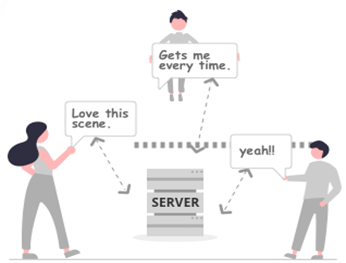
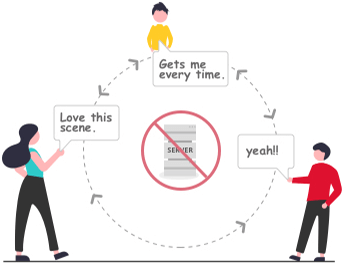
* In some cases, firewall setting doesn't allow direct connection, the calls and messages are encrypted and transmitted via routing servers.
On the gentler end of the cinematic spectrum, Greta Gerwig’s Lady Bird (2017)—while primarily focused on a mother-daughter dynamic—and Alfonso Cuarón’s Roma (2018) showcase how mothers ground their sons during periods of cultural or personal upheaval.
In 20th-century literature, the mother-son relationship shifted toward realism, often highlighting how maternal love can become suffocating or manipulative. D.H. Lawrence: Sons and Lovers (1913)
This film highlights a different kind of tragedy—the parallel descent into isolation. Sara Goldfarb and her son Harry love each other but are completely alienated by their respective addictions. Their relationship is defined by a mutual inability to save one another, leaving both trapped in isolated mental prisons. Autonomy and Co-Dependency in French and Québecois Cinema
Perhaps no novel captures the suffocating weight of maternal love better than D.H. Lawrence’s masterpiece, Sons and Lovers (1913). Drawing heavily on his own life, Lawrence charts the story of Gertrude Morel and her son, Paul. Trapped in an unhappy, abusive marriage to a coal miner, Gertrude pours all her thwarted emotional energy, ambition, and romantic longing into her sons.
Another milestone in modern cinema is Greta Gerwig's Lady Bird (2017). While the central focus is a mother-daughter relationship, the film also subtly handles the quiet, supportive dynamic between the mother and her adopted son, Miguel, showing how financial stress impacts maternal warmth. Jonah Hill's directorial debut, Mid90s (2018), similarly captures the friction between a well-meaning but overwhelmed single mother and her rebellious teenage son seeking validation in skateboard culture. Literature: Navigating Identity and Culture
Cinema took these literary seeds and added a visual, often visceral, dimension. Alfred Hitchcock’s Psycho (1960) remains the definitive "horror" take on the relationship. Norman Bates and his mother (or his internalised version of her) represent the ultimate failure of separation. The "Mother" becomes a monstrous extension of Norman’s own psyche, illustrating the terror of a child who never truly becomes an individual.
In cinema, the theme of maternal sacrifice often drives highly emotional narratives. In Forrest Gump (1994), Mrs. Gump (played by Sally Field) is the defining force in Forrest’s life. Refusing to let society label or limit her son due to his intellectual disability, she single-handedly builds his self-esteem. Her famous aphorisms become Forrest’s guideposts through history.
This theme echoes even in high-octane modern cinema, such as Greta Gerwig’s Lady Bird (2017) or the James Bond film Skyfall (2012). In the latter, the relationship between Bond and M is not biological, but it functions as a mother-son dynamic. The film’s villain, Silva, represents the "bad son"—the one consumed by rage at maternal betrayal—while Bond is the "good son" who returns to protect the mother figure even at the cost of his own ancestral home. It highlights that the mother-son bond is often the blueprint for loyalty and trust.
In the 2015 film Room , a mother (Ma) creates an entire universe within a 10x10 shed to protect her five-year-old son, Jack, from the reality of their captivity. Similarly, in Forrest Gump (1994) , Sally Field portrays a mother whose unwavering belief in her son allows him to navigate life's challenges despite his intellectual limitations.
If you meant something else—e.g., consenting-adult erotica, parent/child relationship counseling, age-appropriate sexuality education, or content-moderation tools—I can help with that. Tell me which of those (or another lawful, non-exploitative) topic you want and I’ll provide a detailed, actionable plan.
Highlighting internal guilt, societal rules, and familial duty through prose.
Fortunately, the portrayal of mothers and sons is not exclusively tragic or toxic. Many contemporary writers and filmmakers use the relationship as a vehicle for redemption, mutual forgiveness, and profound emotional healing.
As societal definitions of family and gender roles continue to evolve, so too will the narratives surrounding mothers and sons. However, the core of the dynamic—the painful, beautiful process of a boy separating from the woman who gave him life to become his own person—will always remain a timeless driver of human drama.
Classical literature established the extreme parameters of the mother-son bond. Sophocles’ Oedipus Rex introduced the tragic concept of subconscious desire and fated attachment, a theme that Sigmund Freud later codified into the "Oedipus Complex." Conversely, the myth of Orestes introduces the theme of matricide and moral duty, where a son is torn between blood loyalty to his mother, Clytemnestra, and justice for his father. These ancient narratives established a precedent: the mother-son relationship is rarely neutral; it carries profound, sometimes catastrophic weight. The Devouring Mother vs. The Nurturer
To help me tailor a more specific analysis or creative piece for you:
[Maternal Archetypes in Film] │ ├── The Suffocating Shadow (e.g., Psycho) ├── The Co-Dependent Alliance (e.g., Mommy) └── The Fierce Protector (e.g., Room) The Thriller and Horror of Maternal Control
In contemporary Irish literature, Colm Tóibín’s collection Mothers and Sons (2006) offers a quieter, more elegiac look at these dynamics, presenting them as "elaborations of repression, desire, and mourning". Tóibín challenges traditional representations of the Irish mother and son, showing how unspoken tensions and past tragedies continue to shape their present interactions in often invisible but profoundly damaging ways. The field of psychoanalysis, particularly the work of D.W. Winnicott, has provided a rich vocabulary for these studies; for example, an analysis of Xavier Dolan's film I Killed My Mother (2009) uses a Winnicottian framework to dissect the "ambivalent relationship" between its protagonists, capturing the love, rage, and desperate attempts at separation that define their lives.
On the gentler end of the cinematic spectrum, Greta Gerwig’s Lady Bird (2017)—while primarily focused on a mother-daughter dynamic—and Alfonso Cuarón’s Roma (2018) showcase how mothers ground their sons during periods of cultural or personal upheaval.
In 20th-century literature, the mother-son relationship shifted toward realism, often highlighting how maternal love can become suffocating or manipulative. D.H. Lawrence: Sons and Lovers (1913)
This film highlights a different kind of tragedy—the parallel descent into isolation. Sara Goldfarb and her son Harry love each other but are completely alienated by their respective addictions. Their relationship is defined by a mutual inability to save one another, leaving both trapped in isolated mental prisons. Autonomy and Co-Dependency in French and Québecois Cinema
Perhaps no novel captures the suffocating weight of maternal love better than D.H. Lawrence’s masterpiece, Sons and Lovers (1913). Drawing heavily on his own life, Lawrence charts the story of Gertrude Morel and her son, Paul. Trapped in an unhappy, abusive marriage to a coal miner, Gertrude pours all her thwarted emotional energy, ambition, and romantic longing into her sons.
Another milestone in modern cinema is Greta Gerwig's Lady Bird (2017). While the central focus is a mother-daughter relationship, the film also subtly handles the quiet, supportive dynamic between the mother and her adopted son, Miguel, showing how financial stress impacts maternal warmth. Jonah Hill's directorial debut, Mid90s (2018), similarly captures the friction between a well-meaning but overwhelmed single mother and her rebellious teenage son seeking validation in skateboard culture. Literature: Navigating Identity and Culture hentai mom son
Cinema took these literary seeds and added a visual, often visceral, dimension. Alfred Hitchcock’s Psycho (1960) remains the definitive "horror" take on the relationship. Norman Bates and his mother (or his internalised version of her) represent the ultimate failure of separation. The "Mother" becomes a monstrous extension of Norman’s own psyche, illustrating the terror of a child who never truly becomes an individual.
In cinema, the theme of maternal sacrifice often drives highly emotional narratives. In Forrest Gump (1994), Mrs. Gump (played by Sally Field) is the defining force in Forrest’s life. Refusing to let society label or limit her son due to his intellectual disability, she single-handedly builds his self-esteem. Her famous aphorisms become Forrest’s guideposts through history.
This theme echoes even in high-octane modern cinema, such as Greta Gerwig’s Lady Bird (2017) or the James Bond film Skyfall (2012). In the latter, the relationship between Bond and M is not biological, but it functions as a mother-son dynamic. The film’s villain, Silva, represents the "bad son"—the one consumed by rage at maternal betrayal—while Bond is the "good son" who returns to protect the mother figure even at the cost of his own ancestral home. It highlights that the mother-son bond is often the blueprint for loyalty and trust.
In the 2015 film Room , a mother (Ma) creates an entire universe within a 10x10 shed to protect her five-year-old son, Jack, from the reality of their captivity. Similarly, in Forrest Gump (1994) , Sally Field portrays a mother whose unwavering belief in her son allows him to navigate life's challenges despite his intellectual limitations. On the gentler end of the cinematic spectrum,
If you meant something else—e.g., consenting-adult erotica, parent/child relationship counseling, age-appropriate sexuality education, or content-moderation tools—I can help with that. Tell me which of those (or another lawful, non-exploitative) topic you want and I’ll provide a detailed, actionable plan.
Highlighting internal guilt, societal rules, and familial duty through prose.
Fortunately, the portrayal of mothers and sons is not exclusively tragic or toxic. Many contemporary writers and filmmakers use the relationship as a vehicle for redemption, mutual forgiveness, and profound emotional healing.
As societal definitions of family and gender roles continue to evolve, so too will the narratives surrounding mothers and sons. However, the core of the dynamic—the painful, beautiful process of a boy separating from the woman who gave him life to become his own person—will always remain a timeless driver of human drama. Lawrence: Sons and Lovers (1913) This film highlights
Classical literature established the extreme parameters of the mother-son bond. Sophocles’ Oedipus Rex introduced the tragic concept of subconscious desire and fated attachment, a theme that Sigmund Freud later codified into the "Oedipus Complex." Conversely, the myth of Orestes introduces the theme of matricide and moral duty, where a son is torn between blood loyalty to his mother, Clytemnestra, and justice for his father. These ancient narratives established a precedent: the mother-son relationship is rarely neutral; it carries profound, sometimes catastrophic weight. The Devouring Mother vs. The Nurturer
To help me tailor a more specific analysis or creative piece for you:
[Maternal Archetypes in Film] │ ├── The Suffocating Shadow (e.g., Psycho) ├── The Co-Dependent Alliance (e.g., Mommy) └── The Fierce Protector (e.g., Room) The Thriller and Horror of Maternal Control
In contemporary Irish literature, Colm Tóibín’s collection Mothers and Sons (2006) offers a quieter, more elegiac look at these dynamics, presenting them as "elaborations of repression, desire, and mourning". Tóibín challenges traditional representations of the Irish mother and son, showing how unspoken tensions and past tragedies continue to shape their present interactions in often invisible but profoundly damaging ways. The field of psychoanalysis, particularly the work of D.W. Winnicott, has provided a rich vocabulary for these studies; for example, an analysis of Xavier Dolan's film I Killed My Mother (2009) uses a Winnicottian framework to dissect the "ambivalent relationship" between its protagonists, capturing the love, rage, and desperate attempts at separation that define their lives.