

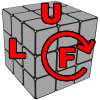
 I used capital letters to mark the clockwise face rotations: F (front), R (right), L (left), U (up), D (down).
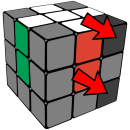 When the white edges are solved we can move on to solve the white corners.
 twisting the corner in each step. Using this trick you can solve each white corner in less than 6 iterations.
 When a center layer piece is in its correct position, but oriented incorrectly then use the same algorithm to take it out, inserting another piece to replace it temporarily.
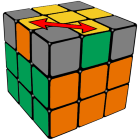

 1. Hold the cube in your hand having an unsolved yellow corner in the highlighted top-right-front position.
 P3d-analyzer-1.56-beta
Its primary functionality is to convert and save binary P3D models into MLOD (Model Library Object Data) format, which can be opened in Oxygen 2.
Modders typically use P3D Analyzer 1.56 Beta when they need to "reverse-engineer" or update older assets:
As a beta release, users are encouraged to submit bug reports via the issue tracker, including:
A fintech firm needed to prove message ordering in a Kafka-to-Postgres pipeline. The IPC forensic mode of generated a non-repudiable log of all 2.3 million transactions, identifying a 4-millisecond reorder caused by a misconfigured linger.ms setting.
The 1.56 Beta version builds on the robust foundation of earlier releases, which introduced game-changing features like saving to MLOD format while keeping your selections intact. Here is what makes this tool essential for your workflow: ODOL to MLOD Conversion : Extract models into the unbinarized MLOD format , making them editable in Object Builder Texture Management P3d-analyzer-1.56-beta
The P3d-analyzer software, particularly the 1.56-beta version, had a significant impact on various fields, including:
It permits localized or comprehensive string replacement of texture pathways without modifying core spatial point arrays. 4. Automated model.cfg Extraction
[ODOL / MLOD File] ---> [P3D-analyzer-1.56-beta] ---> Visual Diagnostics (Solid/Wireframe) ---> Asset Export (MLOD conversion) ---> Scripting Audit (model.cfg extraction) 3. Proxy and Texture Path Auditing
: The uncompressed, raw format utilized natively by modeling tools like Object Builder (O2) or external suites like Blender. Its primary functionality is to convert and save
For anyone serious about modding older Bohemia Interactive engine titles, P3D Analyzer 1.56 beta
One user on the Arma3.ru forums described this process: after debinarizing a building model from DayZ SA using P3D_Analyzer_1.56_Beta , the model could be opened in Object Builder for further work, though he noted some initial texture issues.
It's important to distinguish this tool from similarly named software. P3d-analyzer-1.56-beta is related to the "3D Analyzer" CAD viewer for professional engineering, nor is it the "p3d" data-reduction tool for astronomical spectroscopy, or the scenery analysis tools for Lockheed Martin's Prepar3D flight simulator.
Unlike the official SDK tools which can be heavy to launch, P3D Analyzer acts as a "quick browser" for your library. It is particularly useful for: Automated model
If a model fails to open in P3D Analyzer because its version number is too high, modders sometimes use a hex editor
Flags nodes with high triangle counts, excessive material changes, or unbalanced LOD transitions. Outputs frame time impact estimates for each subtree.
The software features deep structural analysis capable of isolating mechanical properties embedded in the code block. It programmatically pulls out base configuration values, automatically compiling them into valid structural formats like . This streamlines animation configurations for moving parts like wheels, rotors, and weapons doors. Key Upgrades in the 1.56-Beta Build
: The analyzer functions explicitly for data conversion, inspection, and error repair. Highly protected, officially locked premium DLC items will not open or process.
The 1.56 Beta build introduced critical updates over older configurations (such as the 1.53 beta) by natively expanding support for , adding deep recursive search mechanics, and stabilizing batch processing options. 1. Interactive 3D Inspection and Viewports