The PolyTrack 6x classroom full solution includes:
The phrase describes a specific scenario where an entire classroom of students is playing the game simultaneously, often during downtime or in computer labs.
refers to the unblocked, feature-complete version of the fast-paced racing game PolyTrack hosted on popular school-accessible platforms like Classroom 6x . This "full" version typically includes the latest updates, such as level editors and experimental multiplayer support, allowing students to bypass school network restrictions while accessing all of the game's core functionalities. What is PolyTrack?
PolyTrack is far more than a simple browser game. It is a testament to what independent development can achieve: a polished, engaging, and deeply replayable experience that fits in a browser tab. Its low‑poly art style is visually charming without being demanding on hardware. Its physics are challenging without being frustrating. Its track editor unlocks a world of creativity that keeps the game fresh indefinitely. And when paired with the accessibility of platforms like Classroom 6x, it becomes a gaming experience that is available to anyone, anywhere, at any time.
: The game is designed to run smoothly in web browsers, making it ideal for quick sessions between classes. How to Play Drive : Use the WASD or Arrow keys to control your vehicle. polytrack 6x classroom full
PolyTrack is a fast-paced, 3D racing game that feels like a spiritual successor to classics like TrackMania, but with a cleaner, low-poly art style. The goal is simple: navigate a vehicle through complex, gravity-defying tracks filled with sharp turns, insane loops, and jumps, all while trying to achieve the fastest time possible.
At its heart, PolyTrack is a browser-based, time-trial racing game in a distinctive low-poly visual style. Developed by an indie creator named Kodub and heavily inspired by the legendary TrackMania series, the game's core concept is refreshingly straightforward: drive a low-poly car through tracks built from ramps, jumps, loops, and tight corners, racing against the clock and the ghost replays of faster players.
Beyond the developer's official tracks, PolyTrack includes a built-in grid editor. Players can clip together booster pads, loops, vertical drops, and tight hairpins. These custom creations can be exported via text codes, allowing students to swap tracks in the classroom to test who can secure the fastest completion time. Features Matrix: Standard vs. Unblocked 6x Fullscreen
because the platform bypasses school network restrictions by using HTML5-based browser play. Core Mechanics The PolyTrack 6x classroom full solution includes: The
Playing PolyTrack is easy to start, but difficult to master. The controls are simple, but navigating the tight corners requires precision. 1. Master the Controls
+-------------------------------------------------------------+ | SCHOOL/WORK NETWORK | | | | [ User Device ] ---> [ Firewall Filter ] | | | | | v | | ❌ Blocked: Mainstream Gaming Hubs | | ✅ Allowed: Google Sites (Classroom 6x) | | | | | v | | [ Plays PolyTrack ] | +-------------------------------------------------------------+ Core Gameplay Mechanics: The Fight Against the Clock
The term refers to playing the complete, unrestricted version of PolyTrack on the Classroom 6x platform—a network of unblocked gaming sites. It implies access to all tracks, medals, and features without any limitations.
The core game. It is a web-based and downloadable racing simulator defined by its minimalist aesthetic, tight physics engine, and a robust custom track editor. What is PolyTrack
The student-to-teacher ratio isn't 30:1 anymore. It's 180:1 (6x) in terms of cognitive load. One teacher must track six different reading levels, six different emotional states, six different behavioral trajectories—all happening simultaneously. The "classroom" is full, then overfull, then absurdly full.
: Every millisecond counts. Your goal is to master sharp turns, massive loops, and death-defying jumps to shave seconds off your best time.
The central gameplay loop is deceptively simple yet highly addictive. Each track takes between 15 and 90 seconds to complete. After finishing a run, you are shown your time and compared against four medal thresholds: Bronze, Silver, Gold, and the ultimate Author medal—a time that matches or beats the developer’s own performance on that course. Seeing that you missed the Gold medal by a mere 0.2 seconds triggers an almost instinctive reaction: you hit the restart button and try again. This cycle of near misses and incremental improvement forms the addictive heart of the game. It is not uncommon for players to restart a single track dozens, or even hundreds, of times in pursuit of a perfect run.
The vision of Maps-For-Free is to offer free worldwide relief maps and other layers which can easily be integrated into existing map projects.
MFF-maps are released under Creative Commons CC0. You are free to adapt and use the relief maps and relief layer for commercial purposes without attributing the original author or source. Although not required, a link to maps-for-free.com is appreciated.
SRTM (Shuttle Radar Topography Mission) was developed to collect three-dimensional measurements of the Earth's surface to generate a near-global digital elevation model (DEM). The mission was a cooperative project between the National Aeronautics and Space Administration (NASA), the National Geospatial-Intelligence Agency (NGA) of the U.S. Department of Defense (DoD), and the German and Italian space agencies.
SRTM flew on board the Space Shuttle Endeavour in February 2000 and used an interferometric radar system to map the topography of Earth's surface. Endeavour was launched in an orbit with an inclination of 57 degrees which allowed to map all of the Earth's landmass that lies between 60 degrees North and 56 degrees South.
SRTM data was processed into geographic tiles, each of which represents one by one degree of latitude and longitude. A degree of latitude measures 111 kilometers North South, a degree of longitude measures 111 kilometers East West or less, decreasing away from the equator. Each tile of this dataset contains 1201x1201 samples which is equipollent to a 90 m grid resolution at equator. All tiles together represent an image sized 432000 x 139200 pixel.
For technical reasons data are available between 60 degrees North and 56 degrees South latitud only. The relative horizontal accuracy is about ± 15 m, the relative vertical accuracy about ± 6 m. The original data came with data voids indicating insufficient contrast in the radar data. These data voids tend to occur over water bodies (lakes, rivers, coasts, etc.), areas with snow cover and in mountainous regions.
The original SRTM data are available from USGS.
GTOPO30 is another free geographic dataset with a resolution of 43200 x 21600 pixel used to cover regions where SRTM data are not available. Streaky regions denote areas where data voids were extrapolated or where SRTM data were replaced by the lower resolution GTOPO30 data.
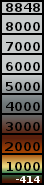
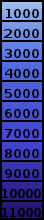
The relief maps are elevation maps, i.e. the coloring does not reflect the natural colors of scenic objects. Because one color is used for each ground level, some rivers and other objects may appear in unnatural colors. Lowland areas containing only few elevation information appear most likely single-colored.
In some cases the SRTM or GTOPO30 dataset failed to include small islands, and in other cases the islands are slightly mispositioned.
The GTOPO data are also available from USGS.
VMap0 provides worldwide coverage of geo-spatial data and is equivalent to a scale of 1:1000000. The data are structured following the Vector Product Format (VPF) and can be downloaded from GIS-Lab. Most of the MFF-layers are based on one of the thematic data vmap0 layer.
Hans Braxmeier, hans.braxmeier@outlook.com