tarot gratis tirada completa de 28 cartas tarot gratis tirada completa de 28 cartas
tarot gratis tirada completa de 28 cartas Home News Planets Renderings Objects Drawings Tutorials tarot gratis tirada completa de 28 cartas
The Sun Mercury Venus Earth Mars Jupiter Saturn Uranus Neptune Pluto

Gratis Tirada Completa De 28 Cartas - Tarot

Guía Completa de la Tirada Completa de 28 Cartas del Tarot Gratis

El verdadero poder de esta tirada radica en que no segmenta la vida del consultante en compartimentos estancos, sino que explora la conexión existente entre ellos. Generalmente, el informe derivado de esta consulta suele enfocarse en cuatro áreas vitales principales.

This public link is valid for 7 days and shares a thread, including any personal information you added. This link or copies made by others cannot be deleted. If you share with third parties, their policies apply. Can’t copy the link right now. Try again later.

Esta sección indica tu situación laboral, potencial de crecimiento, gastos, ingresos y la actitud que tienes hacia el éxito material. 4. Salud Mental y Física (Cartas 17-20) tarot gratis tirada completa de 28 cartas

The origin of the 28-card tarot is not a single, specific historical fact, but is linked to the evolution of card decks and esoteric schools. The conventional 78-card tarot deck is structured into two distinct sets: the Major Arcana (22 cards) and the Minor Arcana (56 cards). Within the esoteric interpretation, the 56 Minor Arcana were divided into the 28 cards of the "female" suits (Cups and Coins) and the 28 cards of the "male" suits (Wands and Swords).

Al ser una tirada con un volumen de información tan elevado, es crucial abordar la lectura con la mentalidad adecuada para no saturarse. Sigue estos pasos antes de hacer clic en tu lectura interactiva o de barajar tus cartas:

Situación laboral actual y proyecciones de carrera. Guía Completa de la Tirada Completa de 28

The "Tirada Completa de 28 Cartas" (Complete 28-Card Spread) is a specialized and extensive layout used in tarot to provide a panoramic view of a person's life. Unlike simpler 3-card or 10-card spreads, this method delves into multiple facets of the human experience simultaneously, including love, career, health, and spiritual growth The Structure of the 28-Card Spread

Da la vuelta a las cartas fila por fila, buscando las conexiones y repeticiones de palos o figuras. Ventajas de una lectura de espectro completo

It is important to note that not all consultations are designed to answer a specific question. There are times when you need a broader spread to get an answer that encompasses the current state of the person being consulted. A complete spread with the Destiny Tarot does not focus on a single aspect of your life but will give you answers considering all the circumstances around you. This link or copies made by others cannot be deleted

Esta lectura se organiza generalmente en forma de pirámide, estrella o en cuatro filas de siete cartas. Cada posición tiene un significado específico que se interconecta con las demás. Estructura y Posiciones de la Tirada

La cuarta fila completa se lee de izquierda a derecha como una narrativa continua que resume el destino global del consultante para los próximos meses. Metodología para la Interpretación

Amor, familia, amistades y traiciones cercanas.
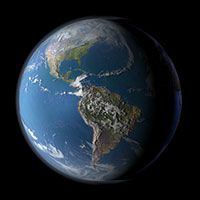
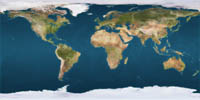
This map is a synthesis between my original earth map, gradient mapping of the USGS DEM information, hand painting, DEM modulation of detail, bathyspheric depth information, and the USGS Ocean clip. Bathyspheric data was used to modulate the color of the water so that deeper areas are a darker blue than shallow areas.
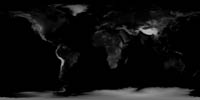
This is pieced together exclusively from the USGS DEM database. It contains landmass elevations only, with the ocean at zero, and the top of Mt. Everest at 255. Use this as a bump map to give the appearance of the Earth's rugged surface features. Some madmen have also used this data in POV Ray as a displacement map on a very finely divided sphere to produce a "true" 3D version of the Earth. The 10K version is VERY large, so make sure you really need that much detail.
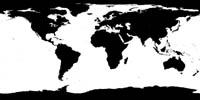
This is derived from USGS DEM data, with the addition of the Arctic ice areas which do not show up on USGS data (since they are not solid land masses.) Use this to control specularity and reflectance of the ocean surface.
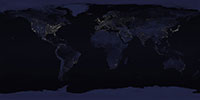
1024 x 512 color image. Very similar to the night lights map as published by NASA on their Blue Marble Page. I took their 30000 x 15000 black and white city lights map, and adapted it with a color table to a colorized version of my earth color map. This comes in 2k, 4k, and 10k versions in color, as opposed to the maximum 2k size of the NASA version of this map (higher resolution versions are available on the paid page only because of their size). Be sure to have a look at the tutorials page for a special rendering tip for using this map.
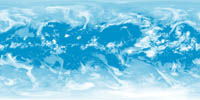
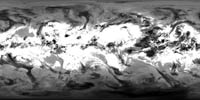
1024 x 512 color image. Based on a mosaic of satellite data, colorized, data errors retouched out, and fixed for seamless wrapping.
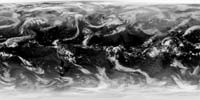
1024 x 512 greyscale image. Based on the same data as the color map, but leveled for the purpose of transparency mapping.

4096 x 2048 greyscale image. Built up out of real satellite imagery based upon a tutorial Dean Scott of Silicon Magic has posted. This is posted in JPEG2000 format. You need a special Photoshop plug-in to make use of jp2 images. I've thoughtfully provided a link:

JPEG 2000 Plugin from Fnord.

Gratis Tirada Completa De 28 Cartas - Tarot

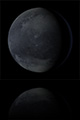
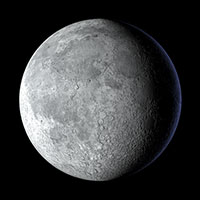
The Moon is a tricky planetoid to render. It has a very distinctive albedo which remains constant across its lit side, regardless of the angle of the surface to the sun. Therefore, standard rendering lighting models do not apply, as they always have a characteristic drop off in intensity as the angle of incidence to the light source increases. In Lightwave, there is an option to use a "non-Lambertian" lighting model on a surface setting. In previous versions of Cinema4D, you had a contrast control in the lighting setup. More recent versions of Cinema4D feature an Oren/Nayar illumination model in the lighting setup which allows you to simulate the lighting properties of "rough" surfaces. This is the method I used on the same pictured here.

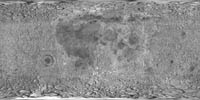
This map is based on a mosaic of satellite data, retouched for visible mosaic seams and for problems with the wrapping seam. Since this image contains highlight and shadow information independent of the location of your light source (inevitable because of how the moon is illuminated by the sun), you'll need to be careful how you light this so you don't break the illusion.

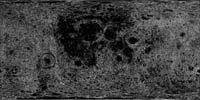
This map is my attempt to derive bump information from the above map. I did a high-pass filter operation to find all the edges of the craters, and then curved the result so that blacks and whites were white, and mid-tones were black. The results came out pretty well, as you can see from the sample image above.


this site works
best on Firefox:


website design © 2006 james hastings-trew